
As the owner of a dog and cat who happen to get along, a clean water bowl is an essential necessity for both.
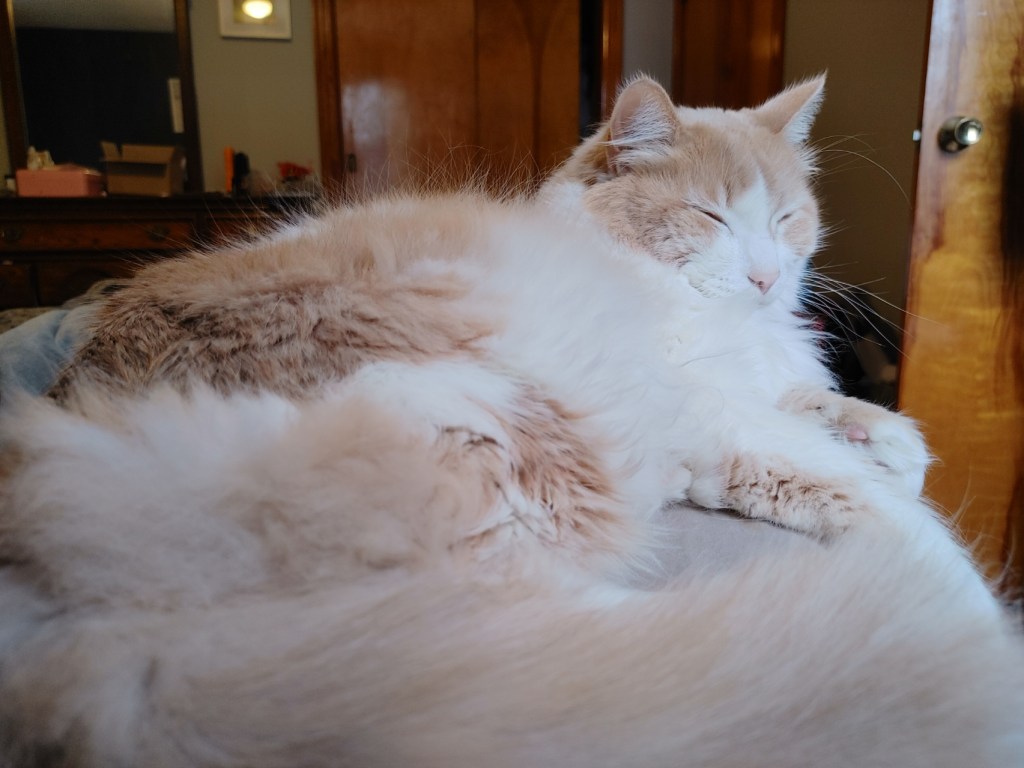
However a few years ago, my cat, Milo, developed a kidney and bladder disease requiring a special diet and a consistent water supply.
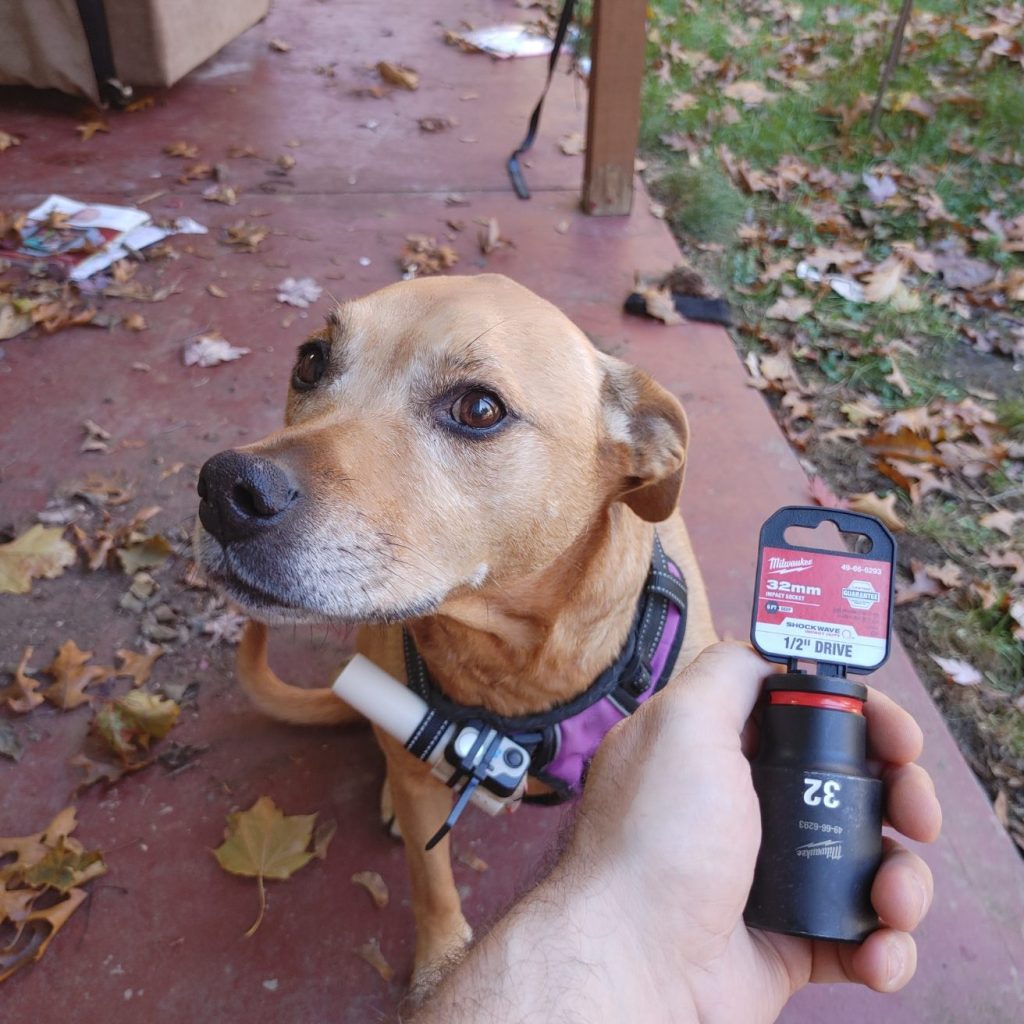
Dandy, shown modeling her new 32mm impact driver socket, is a rottweiler mix. Her father was a mutt of unknown mix. She is about 12 years old at time of publication.
Design considerations
To minimize the chance of forgetting to refill his water bowl in time, I designed an option that would allow me to minimize water changes and bowl cleanings to once per week while remaining attractive enough to remain in core living spaces
Ceramic basin
Ceramic bowls are easier to clean than other materials and plastic bowls are known to leach untested chemicals into water. I had also considered stainless steel or copper as materials, but ultimately opted for ceramic due to manufacturing constraints, availability, and aesthetics.
The basin is a reclaimed designer sink basin recovered from a NYC penthouse remodel. It was chosen not only for its sharp contemporary-modern aesthetic but also for the wide basin allowing for continual storage of up to 16L (approx 4 gal.).
Oak frame
The decorative base holds the recirculation pump, filter, power supply and plumbing. The base is made from solid oak planks reclaimed from university surplus furniture. By using reclaimed wood, I can keep costs low, quality high, and minimize environmental impact.
Recirculation system
The recirculation system uses a 12V marine grade bilge pump and is routed to draw from the bottom drain and pour out the existing sink spigot. The system makes use of an in-line coarse mesh strainer, reclaimed copper tubing, and custom fittings that connect between different pipe standards. Copper was chosen for its naturally anti-microbial and anti-fungal properties while remaining inert for mammals. The strainer removes large matter, such as pet hair, kibble crumbs, etc. and only needs to be cleaned every two months.
The first iteration of the design included a bio-filter, but the pores would clog after only a few days. After testing, I found that the copper pipes sufficiently suppressed biological growth so long as I replaced the water every week, so the bio-filter was removed. Since that also aligns with my plant watering schedule, I reuse the discarded pet water for the plants, resulting in zero water waste.
 Joran Booth, Ph.D. in Mech. Eng.
Leave a comment